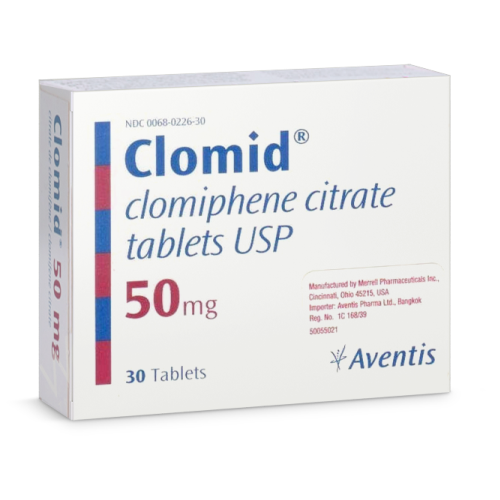
Buy Clomid Online in the United States – Fast Shipping and Secure Checkout

Buy Clomid Online in the United States – Fast Shipping and Secure Checkout
  • Home/
  • Buy Clomid Online in the United States – Fast Shipping and Secure Checkout
Buy Clomid Online in the United States – Fast Shipping and Secure Checkout
This article is for informational purposes only. Medication use is only possible after consultation with a doctor. Self-medication can be dangerous to your health and life.

Clomid (Clomiphene) Comprehensive Guide for Patients in the United States


Is a Prescription Required for Clomid in the United States?

Yes, Clomid (clomiphene) is strictly prescription-only in the United States. It is illegal to purchase Clomid without a valid prescription from a licensed healthcare provider. Any website or seller offering Clomid without requiring a prescription is operating illegally and may be selling counterfeit or unsafe products.

Clomid: Key Facts (2026 Quick Reference)

  • Active Ingredient: Clomiphene citrate
  • Primary Use: Female infertility due to ovulatory dysfunction
  • Prescription Status (US): Prescription only (FDA)
  • Standard Starting Dose: 50 mg daily for 5 days in early menstrual cycle
  • Main Contraindication: Liver disease, abnormal uterine bleeding, ovarian cysts not due to PCOS
  • Legal Purchase: Only from licensed pharmacies with a valid prescription
  • Generic Availability: Yes, several FDA-approved generics since patent expiration
  • Typical Cost (2026): $15–$40 per cycle (generics); $60–$100 (brand name), insurance may cover

How Does Clomid Work in the Body?

Clomid (clomiphene citrate) is a selective estrogen receptor modulator (SERM). It competes with estrogen for binding at estrogen receptors in the hypothalamus, a part of your brain that regulates reproductive hormones. By blocking estrogen's feedback, Clomid tricks the hypothalamus into thinking estrogen levels are low.

This causes the pituitary gland to increase production of two key hormones: follicle-stimulating hormone (FSH) and luteinizing hormone (LH). The spike in FSH stimulates growth of ovarian follicles, while the LH surge triggers ovulation (the release of an egg).

Clomid's effect is indirect: It does not supply hormones itself but nudges your body's system to produce more of your own. For best effect, normal pituitary and ovarian function is required. It is not effective in women with certain types of ovarian failure.

Metaphor: Imagine Clomid as a "volume knob" that lowers the background noise (estrogen signals) so your body "turns up" the production of ovulation-stimulating hormones.

Clinical evidence: Clinical trials (2022–2024) show that Clomid induces ovulation in up to 75–80% of women with ovulatory dysfunction, with a live birth rate of roughly 15–25% per cycle.
PubMed

Expert Commentary from Doctor

As a fertility specialist, I often see misconceptions about how quickly Clomid works or who is a good candidate. Many patients assume it's a guaranteed fix for any infertility, but Clomid is only effective if the underlying issue involves ovulatory dysfunction — not blocked tubes or severe male factor infertility. I counsel my patients that while ovulation rates are high, actual pregnancy rates per cycle are lower. It's essential to use ovulation tracking (like basal body temperature or ovulation predictor kits) for best results. I also remind patients not to increase the dose on their own — higher doses bring more side effects, not necessarily better outcomes.

How to Take Clomid: Dosage and Administration in the U.S.

  • Standard Regimen: Most women start with 50 mg orally once daily for 5 consecutive days, typically starting on day 3, 4, or 5 of the menstrual cycle.
  • Maximum Dose: Do not exceed 100 mg daily; higher doses increase side effect risk but do not improve efficacy for most women.
  • Course Duration: If ovulation does not occur, dose may be increased up to 100 mg per day in subsequent cycles (maximum three total cycles recommended).
  • Age Adjustment: No specific adjustment for older women, but lower pregnancy rates expected with advanced age.
  • Organ Impairment: Use is contraindicated in active liver disease. No renal adjustment necessary, but caution is warranted in severe renal impairment.
  • Tablet Splitting: Clomid tablets are not scored. Do not split unless instructed by your pharmacist or prescriber.
  • Missed Dose: If a dose is missed, do not double up. Continue the next dose as scheduled and inform your doctor.

Onset of Effect: Ovulation usually occurs 5–10 days after the last dose. If pregnancy does not result after 3–6 cycles, further evaluation is recommended.

Clomid and Food, Alcohol, and Lifestyle: What You Need to Know

Food
Can be taken with or without food; high-fat meals may slightly delay absorption, but do not significantly affect efficacy.
Alcohol
Should be minimized or avoided during Clomid therapy and attempts to conceive. Alcohol may impair ovulation and reduce fertility. No direct metabolic interaction, but both can cause liver strain.
Grapefruit Juice
Not known to interact significantly with Clomid. However, as with many medications metabolized by the liver, it's wise to avoid excessive grapefruit intake.
Lifestyle
Maintain a healthy BMI, avoid smoking, and reduce caffeine for optimal pregnancy outcomes with Clomid.

Who Should NOT Take Clomid? Contraindications Explained

Type Condition Explanation
Absolute Liver disease Clomiphene is metabolized in the liver; impaired function increases toxicity risk.
Absolute Abnormal uterine bleeding (unexplained) May signal malignancy; must be investigated before starting Clomid.
Absolute Ovarian cysts (not due to PCOS) Clomid can enlarge cysts, increasing risk of rupture.
Absolute Pregnancy Use during pregnancy is contraindicated; can harm fetus.
Relative Thyroid or adrenal dysfunction May require correction before using Clomid.
Relative Visual disturbances Clomid can worsen these; discontinue if symptoms occur.
Relative History of hormone-sensitive tumors Use only under close supervision.

After certain medical events (e.g., recent liver injury or major surgery), Clomid may only be considered when the underlying issue is fully resolved and with specialist approval.

What Side Effects Are Most Common with Clomid?

Frequency Side Effect Mechanism / Explanation
Very Common
(>1 in 10)
Hot flashes Due to estrogen receptor modulation
Common
(1 in 100 to 1 in 10)
Abdominal discomfort, bloating Ovarian stimulation
Common Breast tenderness Hormonal changes
Common Nausea, vomiting Hormonal fluctuations
Rare
(1 in 1,000)
Visual disturbances (blurred vision, flashes) Possible effect on neural tissue; warrants discontinuation
Rare Ovarian hyperstimulation syndrome (OHSS) Ovaries become enlarged, sometimes dangerously so
Very Rare Seizures, stroke, severe allergic reactions Idiosyncratic or due to excessive dosing
  • What to do if side effects occur: Mild symptoms like hot flashes are often tolerated, but any visual symptoms, severe abdominal pain, or breathing difficulties require immediate discontinuation and urgent medical evaluation.

Common Patient Mistakes Observed by Doctor

  1. Taking extra doses for faster results: Patients sometimes double the dose, believing it will improve pregnancy chances. This increases risk of serious side effects (especially ovarian hyperstimulation) without proven benefit. Always follow your prescribed regimen.
  2. Not timing intercourse with ovulation: Clomid only helps if conception efforts are coordinated. Track ovulation using predictor kits or basal body temperature.
  3. Ignoring visual symptoms: Some dismiss "strange lights" or blurred vision as minor, but these can be signs of serious reactions. Discontinue Clomid and report immediately.
  4. Skipping evaluation for other causes of infertility: Clomid is not effective for tubal or severe male factor infertility. Both partners should undergo a full fertility workup.
  5. Purchasing from unlicensed sources: U.S. patients occasionally buy Clomid from foreign or unverified online sellers to avoid a prescription. This risks counterfeit drugs and legal consequences.

Clomid vs Alternatives: How Does It Compare?

Medication Onset of Ovulation Typical Live Birth Rate per Cycle Side Effects Profile Cost (2026, USD) Prescription Required
Clomid (Clomiphene) 5–10 days after last dose 15–25% Hot flashes, visual issues, ovarian cysts $15–$40 (generic cycle)
$60–$100 (brand)
Yes
Letrozole (Femara) 5–10 days Similar, some studies suggest slightly higher (20–27%) Fatigue, joint pain, headache, fewer multiple pregnancies $25–$80 per cycle Yes
Gonadotropins (Injectable FSH/LH) Variable Up to 30–35% High OHSS risk, injection site pain $800–$3,000 per cycle Yes

Bottom line: Clomid remains a first-line, cost-effective option for ovulatory infertility, but letrozole is often preferred for women with polycystic ovary syndrome (PCOS) due to higher live birth rates and lower risk of twins. Gonadotropins are reserved for resistant cases due to higher risk and cost.

Questions Frequently Asked to Doctor

Is it safe to use Clomid for more than six cycles?
Prolonged use of Clomid is not recommended due to diminished ovarian response and possible increased risk of ovarian tumors. If you haven't conceived after six cycles, your doctor will reassess your fertility plan.
What should I do if I miss a dose?
Take the missed dose as soon as you remember that day. If it's the next day, skip the missed dose—do not double up. Inform your fertility specialist.
Can I drink alcohol during Clomid cycles?
It's best to avoid alcohol, as it may reduce fertility and increase liver strain. There is no absolute contraindication, but limiting or omitting alcohol is safest.
Will insurance cover Clomid?
Many U.S. insurance plans cover Clomid for approved infertility diagnoses, but coverage varies. Check with your provider and ask your pharmacy to run a benefits check.
Are there any interactions with common over-the-counter medications?
Most OTC drugs are safe, but always notify your doctor of all substances you take. Avoid herbal fertility products unless cleared by your doctor, as interactions are not well studied.
Can men use Clomid?
Clomid is sometimes prescribed off-label for male infertility, but evidence is less robust. Dosing and monitoring must be individualized under specialist supervision.
How soon after stopping birth control can I start Clomid?
Usually, you can begin Clomid with your first natural cycle after stopping hormonal contraception. Your doctor may check hormone levels before starting.

Clomid: Key Characteristics Table

ParameterValue
Active IngredientClomiphene citrate
Typical Dose50 mg daily for 5 days
Max Duration6 cycles (3 cycles often recommended first-line)
AbsorptionRapid, peak in 5–7 hours
MetabolismLiver (CYP2D6, CYP3A4)
EliminationPrimarily feces, some urine
Half-life5–7 days (active isomers linger)
Onset of EffectOvulation 5–10 days after last dose
Pregnancy CategoryContraindicated during pregnancy
Insurance CoverageOften covered for infertility; check plan

How to Obtain Clomid Legally in the United States: Step-by-Step

  1. Consult a specialist: Schedule a visit with a board-certified OB/GYN or reproductive endocrinologist (find one through SART or your local hospital).
  2. Fertility evaluation: Undergo appropriate bloodwork, ultrasound, and (if indicated) partner testing to confirm Clomid is appropriate and safe.
  3. Receive prescription: If indicated, your doctor will prescribe Clomid electronically to your chosen pharmacy.
  4. Pharmacy fulfillment: Pick up Clomid at a licensed U.S. pharmacy. Online pharmacies (e.g., GoodRx partners) are legal if they require a valid prescription and are NABP-accredited.
  5. Telemedicine: Many states allow online/telehealth consultations for Clomid. The process: intake questionnaire → video/phone appointment → prescription sent to local pharmacy.
  6. Insurance reimbursement: Ask the pharmacy to bill your insurance; many plans will cover Clomid for infertility.

Reminder: Buying from non-U.S. or non-accredited websites is illegal and dangerous.

How to Identify Genuine Clomid and Avoid Counterfeits

  • Packaging: FDA-approved Clomid comes in official blister packs with manufacturer (e.g., Sanofi or EMD Serono) logos and lot numbers. Generics should list the FDA-approved manufacturer.
  • Tablet appearance: Original Clomid tablets are white, round, and embossed with identifying codes. Generics vary, but always check imprint details with your pharmacist.
  • Price red flag: Extremely low prices or offers "without prescription" usually indicate counterfeits.
  • Verification features: Most U.S. manufacturers include QR codes, barcodes, or holographic seals. You can verify product legitimacy using the manufacturer's website or FDA drug database.
  • Generics: FDA-approved generics (clomiphene citrate) are equally effective, with the same active ingredient. Inactive fillers may vary, so check for allergies to excipients if you have sensitivities.
Quality Check: If your Clomid looks, tastes, or smells odd, or the packaging lacks U.S. pharmacy labeling, do not use it. Bring it to your pharmacist for verification.

Compatibility Chart: Clomid and Other Medications

Product/Drug Can It Be Combined? Consequences
Acetaminophen (Tylenol) Yes No significant interaction
Ibuprofen (Advil) Yes Generally safe; use short-term
Oral contraceptives No Will negate effect of Clomid
Alcohol Caution Liver strain, may lower fertility
Letrozole No Should not be used together for ovulation induction
Herbal supplements Caution Unknown interactions; consult your provider
Nitroglycerin Yes No direct interaction, but consult for your condition

Special Considerations: Specific Patient Groups

  • Polycystic Ovary Syndrome (PCOS): Clomid is effective but letrozole may be preferred due to higher success and lower risk of multiple births.
  • Liver Disease: Clomid is not recommended; alternative treatments required.
  • Kidney Disease: No dose adjustment, but use with caution in severe cases.
  • Breastfeeding: Not recommended—safety unknown.
  • Driving/Operating Machinery: Clomid can cause visual disturbances; avoid driving if vision is affected.
  • Men: Sometimes prescribed off-label for hypogonadism or male infertility; safety and efficacy are less established.

What to Do in Case of Clomid Overdose: Emergency Steps

  1. Stop taking Clomid immediately.
  2. Contact emergency services at 911 or go to the emergency department.
  3. Bring the medication packaging and inform the medical team of the dose and timing.
  4. Monitor for severe abdominal pain, vomiting, visual changes, or shortness of breath; these require urgent attention.

Myth vs Reality: Clomid Misconceptions

  • Myth: Clomid guarantees pregnancy in every woman.
  • Reality: Clomid only works for specific ovulatory disorders and achieves pregnancy in about 1 in 4 cycles.
  • Myth: Higher doses are more effective.
  • Reality: Doses above 100 mg often increase side effects, not success rates.
  • Myth: You can safely buy Clomid online without a prescription.
  • Reality: This is illegal and risky; counterfeits are common and can be dangerous.

Professional Opinion of Doctor

In my clinical practice, Clomid is best suited for women with confirmed ovulatory dysfunction and otherwise normal reproductive anatomy. It's an affordable, well-studied, and widely available medication with a long track record of safety when used as recommended. However, it's vital to emphasize that Clomid is not a universal infertility cure. For women with tubal blockage, advanced maternal age, or significant male factor infertility, alternative treatments or assisted reproductive technology may be preferable. Patients with liver disease or a history of abnormal uterine bleeding must avoid Clomid altogether. I encourage every patient to approach treatment as a partnership — consistent follow-up and honest communication lead to the best outcomes. Always seek a tailored plan from a qualified reproductive endocrinologist.

Psychological Support and Fertility: You Are Not Alone

Infertility is more common than most realize, and many individuals and couples feel isolated or at fault. Please remember: you are not alone, and effective help is available. Psychological stress can impact fertility, so consider support groups or counseling. Discussing concerns with your partner and medical team can lighten the emotional load and improve treatment outcomes.

FAQ: Clomid in the United States

Can I buy Clomid without a prescription in the U.S.?
No. Federal law requires a prescription for Clomid. Buying without one is illegal and unsafe.
How long does it take for Clomid to work?
Ovulation usually occurs 5–10 days after finishing the last dose of a treatment cycle.
What are the main risks of Clomid?
Hot flashes, visual disturbances, ovarian cysts, and (rarely) ovarian hyperstimulation syndrome. Report any vision changes or severe pain immediately.
Is Clomid safe for men?
It is used off-label for some forms of male infertility, but this should only be done under specialist guidance.
Will insurance cover Clomid?
Most U.S. insurers cover Clomid for diagnosed infertility, but requirements vary. Check your plan details.
Does Clomid increase the chance of twins?
Yes, the risk of multiple pregnancies (mainly twins) is about 6–10% per cycle.
Can I use Clomid if I have PCOS?
Yes, but letrozole is increasingly preferred due to higher pregnancy rates in PCOS. Discuss options with your doctor.
Can I drive while taking Clomid?
Only if you do not experience visual disturbances. If your vision changes, avoid driving and contact your provider.

References

  1. U.S. Food and Drug Administration, Clomiphene Citrate Drug Information. Accessed 2026.
    https://www.fda.gov/drugs
  2. Mayo Clinic, Clomiphene (Oral Route) Description and Brand Names. Accessed 2026.
    https://www.mayoclinic.org/drugs-supplements/clomiphene-oral-route/description/drg-20067817
  3. American Society for Reproductive Medicine (ASRM), Practice Committee Guidelines on Ovulation Induction. Accessed 2026.
    https://www.asrm.org/
  4. PubMed, Recent Clomiphene Efficacy Studies (2022–2024). Accessed 2026.
    https://pubmed.ncbi.nlm.nih.gov/
  5. Centers for Disease Control and Prevention (CDC), Infertility Fast Facts. Accessed 2026.
    https://www.cdc.gov/reproductivehealth/infertility/index.htm
  6. National Association of Boards of Pharmacy (NABP), Online Pharmacy Verification. Accessed 2026.
    https://www.nabp.pharmacy/programs/accreditations-inspections/dotpharmacy/
  7. SART (Society for Assisted Reproductive Technology) Clinic Finder. Accessed 2026.
    https://www.sart.org/
«